Categories
Close
Menu
Menu
Close
Search
Search

Featured Articles

RSS
123

Opinion Articles

Opinion

Is Google’s new mobile phone distribution model really a big deal for the UK?

Mark

Share:

Print

Rate article:

No rating
Rate this article:
No rating

Mark Bridge writes:

“Google offers New Model for Consumers to buy a Mobile Phone”. Not my words but those of Vodafone as it announced it was the first operator to bring the new Google phone offer to Europe.

There’s a lot of talk about Google’s online ordering process for its Nexus One smartphone… or ‘superphone’ as the company described it at yesterday’s launch.

Google itself talks about its new approach to buying a mobile phone in a blog post that says the goal of its online store is “to provide an efficient way to connect Google's online users with selected Android devices”. Or, as we say here in the UK, to make it easy for people to buy Android phones.
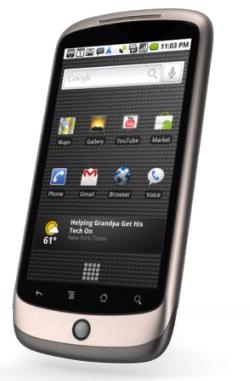
Google Nexus OneNow, the Nexus One itself is a smart piece of kit. Running Android 2.1, it offers some technically clever stuff like voice control and noise-cancelling microphones – and some colourful frippery, including moving wallpaper, a tilting photo gallery and a multi-hued trackball.

But – as ever – I digress. Back to the ordering process. People are talking about Google taking over the ordering process and about mobile operators being relegated to ‘dumb pipes’ or ‘utility companies’.

I really don’t see it’s that different from buying an iPhone two years ago. You chose your device and then you put up with the network and tariff that was offered.

If anything, this sudden interest in Google’s web store is a reflection on the process of buying a mobile phone in the United States. Here in the UK, networks have tried in recent years – albeit half-heartedly in some cases – to make it easier to connect. Easier to understand their tariffs. Easier to get a decent deal if you already have a phone.

From what I hear, things haven’t progressed that much in the USA. I’ve seen the sales process of buying a mobile phone in the States equated with buying a car. Hours spent with a salesperson. Over there, it’s fair to say that Google has the potential to disrupt the traditional distribution model. Over here – at least at the moment – it’s barely raising eyebrows. This could be the start of something big… but it’s certainly not something starting big.

Comments

Collapse Expand Comments (0)
You don't have permission to post comments.

Recent Podcasts

ExclusiveJohan Lodenius of MediaTek talks about wearable devices, smartphone evolution and the importance of driving costs down

This year's Mobile World Congress was notable for the number of product launches by handset manufacturers. To get a better understanding of smartphone manufacturing, we spoke to Johan Lodenius of semiconductor company MediaTek.

He gave us a simple overview of how 'fabless' manufacturing works, discussed developments in smartphones and wearable devices, contemplated the end of the PC era and talked about the importance of driving costs down.

ExclusiveMobile payments, new smartphones, wearable devices, connected cars, CeBIT and David Cameron

This week's programme opens with a quick look at David Cameron's commitment to 5G technology and the Internet of Things, which was made in a speech at CeBIT.

Iain and Mark then move on to talk about the other big mobile news headlines from the past few days, including the forthcoming Paym m-payment service, new HTC and LG smartphones, the growth of Chinese handset manufacturers, wearable devices, in-car connectivity and damaged iPhones.

ExclusiveThe rise of OTT messaging and the future of SMS: we talk to Stacy Adams of mBlox

Messaging was very much on the agenda at Mobile World Congress this year, following Facebook's announcement that it was planning to acquire WhatsApp in a 19 billion dollar deal. So if the future for this type of internet-based 'over the top' messaging service looks good, what does this mean for SMS?

To find out more, we spoke to Stacy Adams of mBlox to learn what was happening in the messaging world, to find out how SMS is being integrated with mobile apps - and to discover some of the other ways SMS was being used by businesses today.

ExclusiveWe talk about 4G LTE coverage and device sensors with OpenSignal at Mobile World Congress

Even at Mobile World Congress, the relevance of the mobile network operator can sometimes be forgotten. So for a different perspective on this year's event, we spoke to Samuel Johnston from British mobile crowd-sourcing firm OpenSignal.

Samuel discussed the announcements from MWC14 and OpenSignal's latest report into 4G LTE coverage around the world, as well as giving us an exclusive insight into OpenSignal's next research subject.

RSS
First567810121314Last

Follow thefonecast.com

Archive Calendar

«May 2026»
MonTueWedThuFriSatSun
27282930123
45678910
11121314151617
18192021222324
25262728293031
1234567

Archive