Mark Bridge writes:
This week’s podcast feature from TheFonecast.com takes a look at mobile telecare: using mobile telecommunications to help elderly people and those with special needs.
UK-based Burnside Telecom has recently announced a couple of telecare products that take advantage of the company’s expertise in producing ‘fixed cellular’ devices, so I’ve been talking to managing director Colin Aitken about these new products.
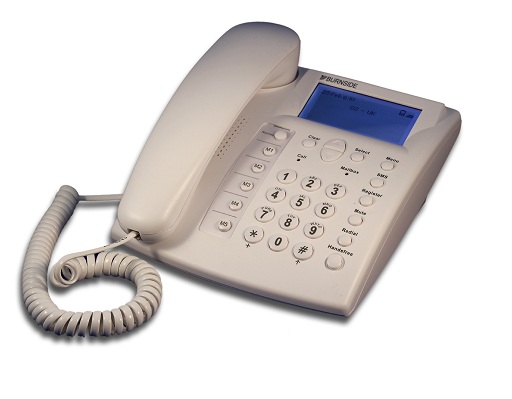 The Easy Answer II looks like a conventional desktop fixed-line phone, although it’ll work anywhere there’s GSM mobile coverage. It can even be programmed to answer certain calls automatically and switch to hands-free operation, which means the recipient doesn’t need to move or lift the handset. In addition, an optional ‘emergency call’ button can be connected, enabling the phone to make an alarm call or send a text message in an emergency.
“In the research that we did, the feedback was it would be very useful to have a trigger alarm connected to this device, which allows people to send an alert to a call centre via the GSM networks should they need any help or assistance”, Colin explained.
Burnside Telecom also plans a virtual network deal with a SIM card that’ll connect to any of the UK’s mobile networks, offering better coverage than a standard network connection.
“The card will be installed in the phone [and] will automatically connect to whichever network has the best coverage in the location. We take away all of the hassle - as much as we can - of determining which network is best for a particular location.”
The second new product is MoniCare, an online monitoring application that’s able to check, control and update Burnside GSM terminal equipment. It means individual users and residential care homes can enjoy an automated monitoring and support solution for their telecare equipment. In simple terms, a text message can be sent to a Burnside device to check it’s working - and devices can send alerts when there are certain alarm conditions.
“We’ve developed a web-based application that allows an operator to monitor the state of our devices. For example, if there was a power failure in a property, our device would be able to send an alarm over the GSM network to a monitoring centre which would then be able to respond to the alarm”, Colin said. “This is just the first of a series of applications that we expect to be able to launch to Lift operators or SOS roadside assistance telephones… it’s intended to be a service that can be delivered over a website that allows people to deploy them very cost-effectively. At the end of the day, we’re trying to use the technology to deliver better services at more affordable costs.”
MoniCare and the Easy Answer II are both due to be released in 2012.
| You can listen to the full interview with Colin Aitken on our website, via iTunes or by downloading the MP3 file. To download all our podcasts automatically, simply find us on iTunes or subscribe to our RSS feed. |