Mark Bridge writes:
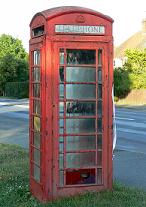 The public telephone box is disappearing as mobile phone coverage improves. In 2002, there were 92,000 BT phone boxes in the UK. Today, there are a total of 51,500 payphones… including 11,000 traditional red boxes. In order to preserve the appearance of rural life - if not the landline connection - BT has been asking parish councils across the UK if they’d like to adopt their local kiosk. Just £1 lets a community keep its red BT phone box (with the fixed-line payphone taken out)… and 1,500 have been adopted so far.
One of the latest innovations for these disused kiosks involves fitting them with defibrillator equipment, thanks to BT’s partnership with the Community Heartbeat Trust. BT is paying for the machines to be fitted in five kiosks across the country. Defibrillation equipment is fitted inside the kiosk in a secure vandal-resistant steel cabinet; the combination lock for the cabinet is available from the emergency services by calling 999.
Using the defibrillator machine requires no training because it provides step-by-step spoken instructions. It even analyses the casualty to determine if they are suffering from cardiac arrest. When necessary, it can deliver a powerful electric shock to restore a normal heartbeat to the sufferer.
Martin Fagan, national secretary of the Community Heartbeat Trust, said “We are immensely grateful to BT for their help in this novel use of a familiar icon, phone boxes are ideal locations for emergency medical equipment because they’re often in the centre of a village. With something as serious as a cardiac arrest, time is of the essence, and unfortunately the emergency services can’t always reach country villages in the recommended five minutes. We hope that many more people will adopt their kiosk and enlist our help to save lives in rural communities.”
Currently 100,000 calls are made each day from public payphones, although the number of calls made from payphones is falling by 25% annually. Almost two-thirds (64%) of UK phone boxes are unprofitable.