Categories
Close
Menu
Menu
Close
Search
Search

Featured Articles

RSS
123

Opinion Articles

Opinion

The landline phone may be fading... but its number still remains

Mark

Share:

Print

Rate article:

No rating
Rate this article:
No rating

Mark Bridge writes:

In last weekend’s Sunday Times, Ali Hussain asked "Is this the end for the landline phone?"

He pointed out that the average mobile bill almost halved between 2003 and 2008, while landline bills fell by less than a fifth – which has meant the average mobile bill is now lower than the average landline bill. He went on to list fibre-optic broadband, mobile broadband, mobile calls, VoIP calls and satellite phones as alternatives to using fixed-line phones.

If only life were that simple. Yes, there are alternatives to fixed-line phones... but there always have been. And some of the alternatives aren't all that practical.

First of all, mobile data costs haven’t fallen as dramatically as call costs. Sure, they’re on their way down – but out-of-bundle data usage can be painfully expensive. As can sat-phone calls.

Secondly, mobile data speeds still struggle to catch most home broadband services. And having a landline phone also guarantees you 100% coverage for calls, something even a femtocell can't always promise.

But I think the real reason the landline phone isn’t dead yet is trust. Stick a mobile number on the side of your trade van – especially if you use magnetic signage – and many people will label you a fly-by-night. Print a mobile number on your business card without adding a landline and you might as well print it on toilet paper, according to some business people. It's one of the reasons (apart from cost) that non-geographic numbers are unpopular. No landline equates to "no fixed abode".

Much of this trust and mistrust is misplaced, mind you. Skype is one of many telecom companies that’ll sell you a geographical ‘landline’ number without you needing to even set foot in your chosen town. I can have a virtual office in central London – and San Francisco – without getting out of bed. Yet we still trust landlines ahead of mobiles.

Having said all that, most of today’s first-time mobile buyers don’t think of telephone lines as things to trust. Instead they're a barely-necessary utility. And before too long we won’t be dragging numbers around with us, either. We’ll have dot.tel domains or something similar that’ll route calls to our chosen device wherever we are and whatever we're using.

Even at that point, the landline phone won’t reach the end of the line. (Sorry, couldn’t resist it). But it will become invisible. And that’s something the mobile phone companies need to be ready for as well. Meanwhile, the landline has definitely faded - but, like the Cheshire Cat's smile - its number remains.
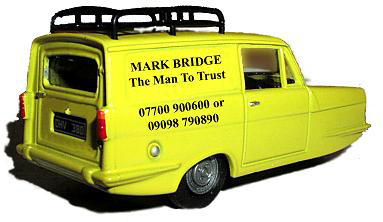
Reliant Regal van


Comments

Collapse Expand Comments (0)
You don't have permission to post comments.

Recent Podcasts

ExclusiveJohan Lodenius of MediaTek talks about wearable devices, smartphone evolution and the importance of driving costs down

This year's Mobile World Congress was notable for the number of product launches by handset manufacturers. To get a better understanding of smartphone manufacturing, we spoke to Johan Lodenius of semiconductor company MediaTek.

He gave us a simple overview of how 'fabless' manufacturing works, discussed developments in smartphones and wearable devices, contemplated the end of the PC era and talked about the importance of driving costs down.

ExclusiveMobile payments, new smartphones, wearable devices, connected cars, CeBIT and David Cameron

This week's programme opens with a quick look at David Cameron's commitment to 5G technology and the Internet of Things, which was made in a speech at CeBIT.

Iain and Mark then move on to talk about the other big mobile news headlines from the past few days, including the forthcoming Paym m-payment service, new HTC and LG smartphones, the growth of Chinese handset manufacturers, wearable devices, in-car connectivity and damaged iPhones.

ExclusiveThe rise of OTT messaging and the future of SMS: we talk to Stacy Adams of mBlox

Messaging was very much on the agenda at Mobile World Congress this year, following Facebook's announcement that it was planning to acquire WhatsApp in a 19 billion dollar deal. So if the future for this type of internet-based 'over the top' messaging service looks good, what does this mean for SMS?

To find out more, we spoke to Stacy Adams of mBlox to learn what was happening in the messaging world, to find out how SMS is being integrated with mobile apps - and to discover some of the other ways SMS was being used by businesses today.

ExclusiveWe talk about 4G LTE coverage and device sensors with OpenSignal at Mobile World Congress

Even at Mobile World Congress, the relevance of the mobile network operator can sometimes be forgotten. So for a different perspective on this year's event, we spoke to Samuel Johnston from British mobile crowd-sourcing firm OpenSignal.

Samuel discussed the announcements from MWC14 and OpenSignal's latest report into 4G LTE coverage around the world, as well as giving us an exclusive insight into OpenSignal's next research subject.

RSS
First567810121314Last

Follow thefonecast.com

Archive Calendar

«May 2026»
MonTueWedThuFriSatSun
27282930123
45678910
11121314151617
18192021222324
25262728293031
1234567

Archive