Mark Bridge writes:
In my last article I looked forward to a world of cyborgs… but feared that decent battery life could stifle my dreams. And this week I’m on a similar theme, despairing that the UK’s mobile coverage problems probably won’t be solved before the Silver Jubilee of Vodafone and Cellnet’s networks.
To illustrate my worries, let me tell you a story. Once upon a time I worked for BT. “British Telecom” they called themselves then, before the shame of being a British telecommunications company caused them to change their name. And, as all British Telecom employees did, I signed the Official Secrets Act.
Fortunately, the information I’m about to disclose wasn’t passed to me in the course of my work – otherwise this could be the last opinion piece I wrote for a while.
When I started work at BT, they were – in simple terms – the UK’s telephone company. In reality that wasn’t true, because Kingston-upon-Hull had its own telecoms structure, Mercury Communications had recently been formed and System 4 carphones were available, but let’s overlook all that for the moment.
One of BT’s responsibilities, so I was told – this is the bit I was told outside work, your honour – was to make sure every town and village had telephone service. If a remote community or village didn’t have a property with telephone service, BT (or its predecessor, Post Office Telecommunications) would make sure there was a telephone box available. This may have been fiction or exaggeration, but it seemed perfectly plausible to me. Therefore, in case of emergency, there was a pretty darned good chance someone would be able to phone for help.
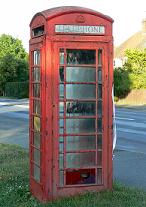 Fast-forward to 2009 and BT no longer has a monopoly on providing telephone service. The red telephone box is disappearing, with a number of local councils choosing to ‘adopt’ an unprofitable local box for £500 a year – around half of the actual running costs – to prevent BT from removing them.
Yet there’s no true mobile replacement. Almost 25 years after the first cellular mobile phone call in the UK and I could still be stuck in a large number of UK locations without service from any of the country’s five networks. Worse still, rival networks won’t lift a finger to help. If I’m a Vodafone customer without coverage and there’s O2 service available, the networks will shrug apologetically. Even my handset joins in – taunting me with an on-screen “emergency calls only” message but not letting me make any.
Okay, so it’s all being fixed. To quote Ofcom’s consultation document from earlier this month: “We believe that now is the right time to look more closely at the nature of, and reasons for, the persistent 2G ‘not-spot’ problem as well as the state of mobile broadband coverage and work where appropriate to facilitate better coverage”. And emergency roaming could be in place by the end of the year if trials work out okay. But it’s still taken a quarter of a century.